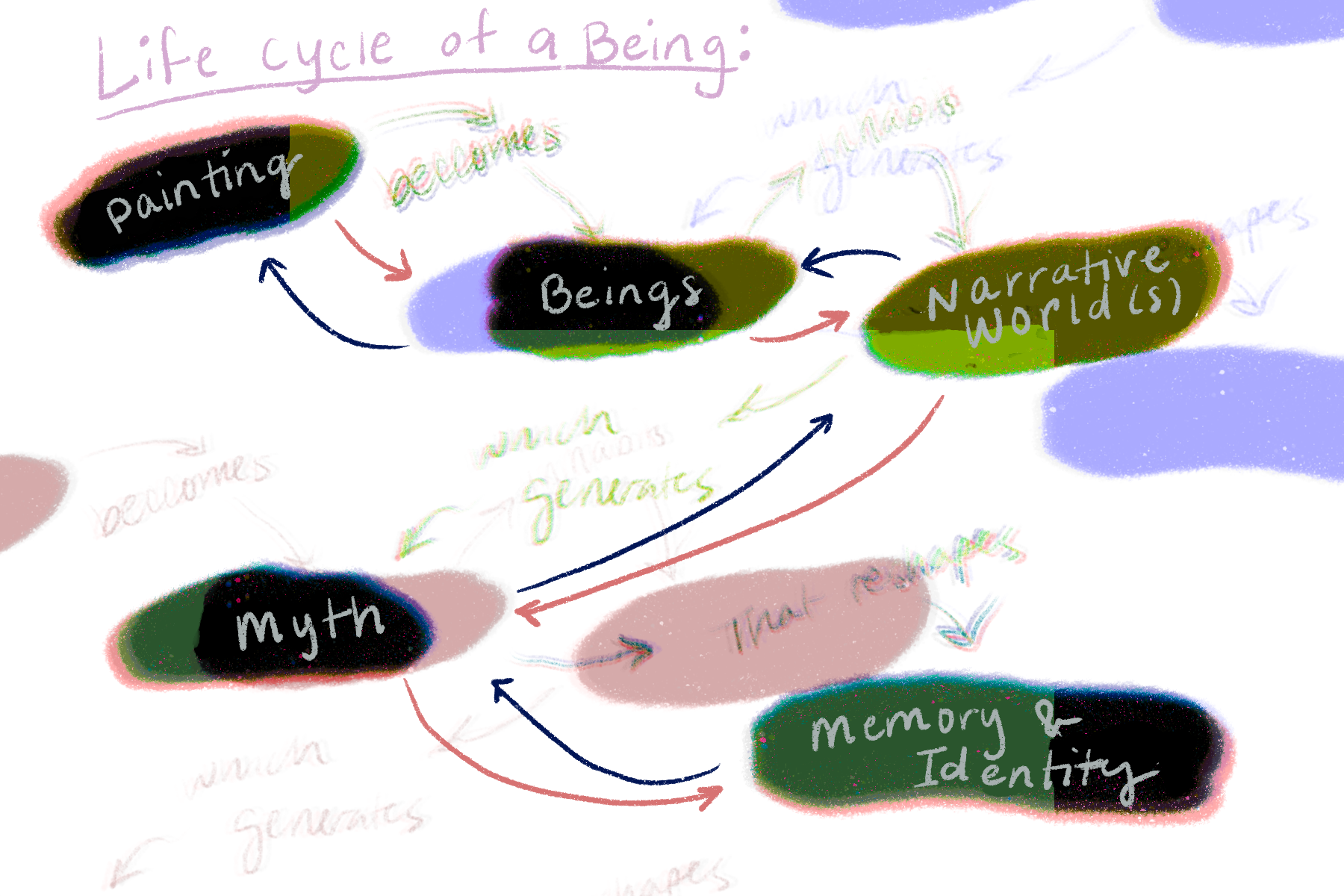
Paintings become beings. Beings become myths. Myths become ways of being.
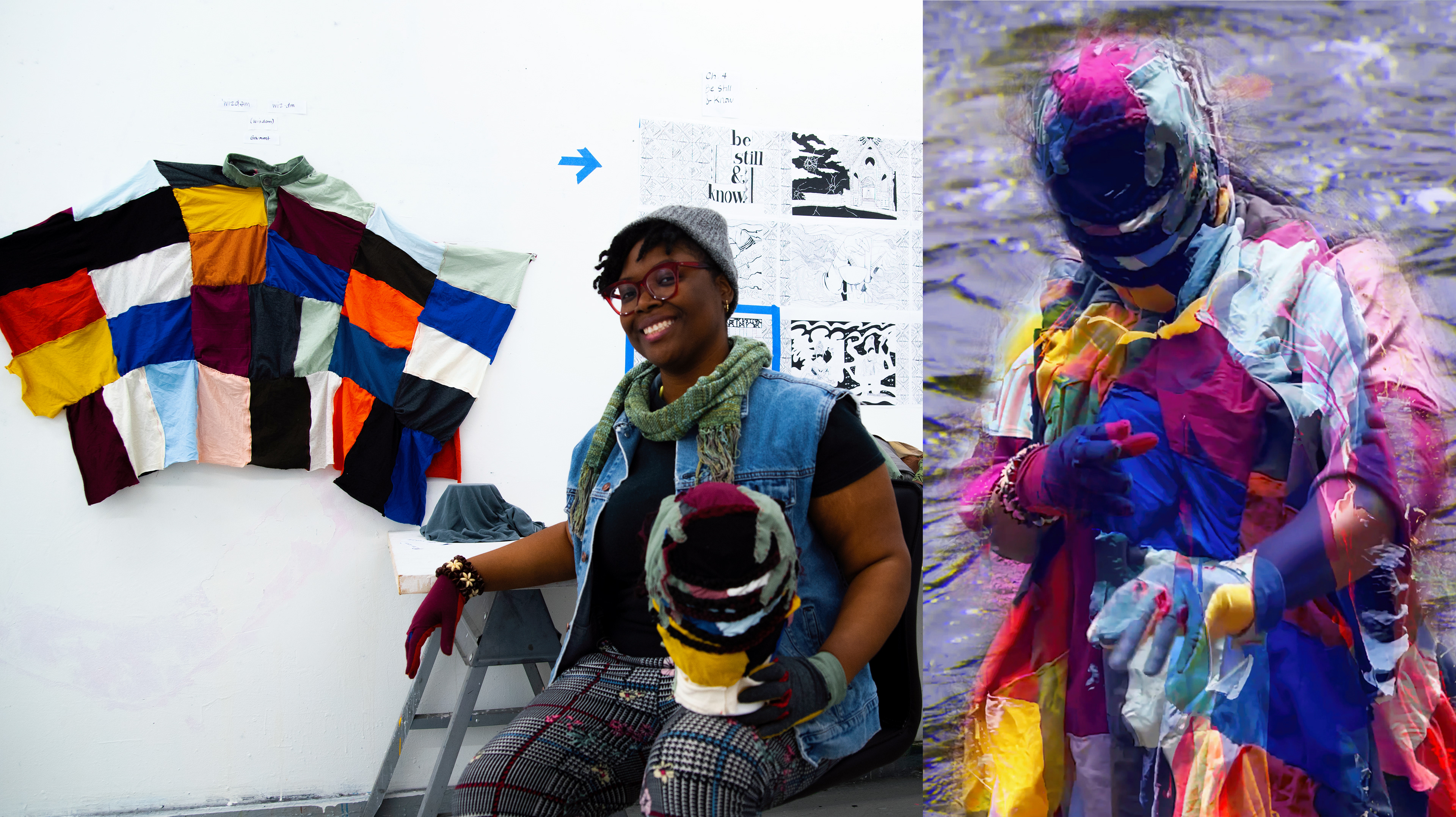
Philosophy of making/Bio: I make “paintings”, then wrap them around my body until they become beings.
These embodied beings give form to contemporary mythologies that investigate identity, inheritance, memory, and healing. I build an expanding narrative universe that unfolds across multiple forms. Rather than representing autobiography, these narrative worlds create space where personal memory and collective histories can be transformed into new cultural myths.
My beings migrate.
They don't belong to one exhibition. They appear in performances.
They exist in photographs. They speak through poetic texts and sound collage.
They live in books. They return years later.
The beings return because the questions of being endure.
In addition to making art, I am an adjunct professor and teaching artist partnering with arts organizations, museums, and universities to create exhibition resources, facilitate art workshops, and deliver thought-provoking lectures. I received a Master of Fine Arts in Studio Art with a focus on painting from Wichita State University, a Graduate Certificate in Marketing from Liberty University, and a Bachelor of Fine Arts in Art, majoring in painting with a minor in Art History, from Missouri State University.
I've had the privilege to hold solo and group exhibitions at prominent venues including the Wayfarers Gallery in Brooklyn, NY, The Ulrich Museum of Art and The Kansas Museum in Wichita, KS, and Center [3] Artistic + Social Practice in Ontario, Canada.